Hongliang Zeng (Xavier)

AI & Embodied Intelligence Researcher

Download CV
Hongliang Zeng

About

I hold a Ph.D. from South China University of Technology (advised by Prof. Ping Zhang), with research spanning embodied intelligence, robotic manipulation, active perception, reinforcement learning, and 3D point cloud understanding. I have published 7 first-author papers at IJCAI, AAAI, TNNLS, ICASSP, and ICME (4 Oral). I now work at Astribot as an Embodied Intelligence Algorithm Engineer, building VLA training pipelines and applying RL and world models to dual-arm manipulation.

Education

Sep 2020 — Jun 2025
  • Research on embodied intelligence, including robotic manipulation, active perception, and reinforcement learning, published at IJCAI, AAAI, TNNLS, etc.
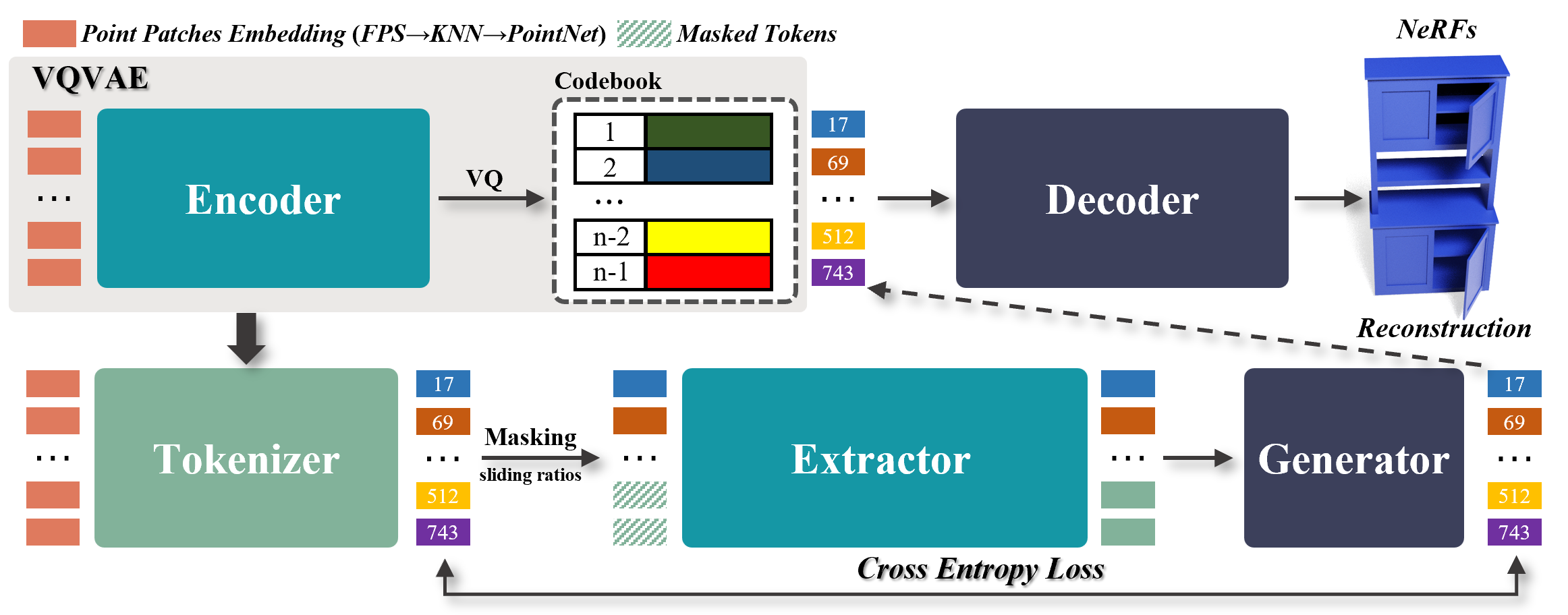
  • Research on 3D point cloud self-supervised learning and generation, published at ICASSP, ICME, etc.
  • Granted patent: A Method and System for Robotic Manipulation of Articulated Objects.
Robotic Manipulation Computer Vision
Sep 2014 — Jun 2018

Undergraduate studies in mechanical engineering.

CAD SolidWorks

Work Experience

Nov 2024 — Present

Embodied Intelligence Algorithm Engineer

Astribot, Shenzhen

Algorithm

  • Unified the value model and VLA into a single training pipeline and implemented RL with real-robot recap rollouts, enabling the Astribot S1 to accomplish deformable-object manipulation (e.g., cloth folding) for the first time; delivered an internal demo.
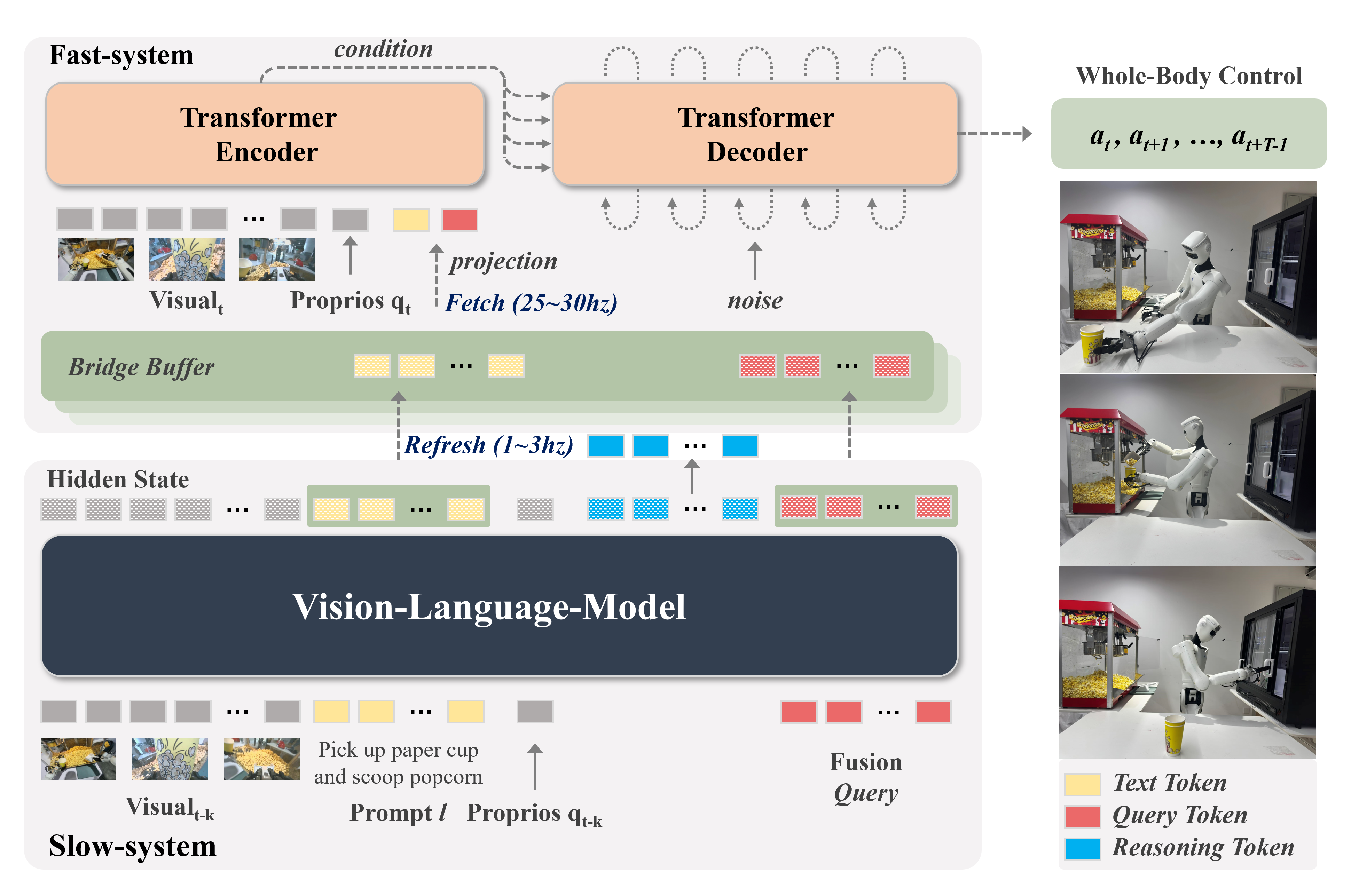
  • Co-first author and core developer of DuoCore-FS, an asynchronous fast-slow dual-system VLA for whole-body manipulation. Contributed to architecture design, real-robot deployment, and paper writing. Achieved 30 Hz action generation (3× faster than comparable VLAs).
  • Implemented Real-Time Chunking (RTC) during training, achieving smoother action-chunk transitions, significantly reducing post-hoc trajectory smoothing on the control side, and improving action tracking precision.
  • Reproduced and integrated multiple mainstream VLA models (π0, π0.5, π0.6*, RDT-2, WALL-X, MEM, VLA-Adapter, etc.). Built two in-house VLAs by adding flow-matching action heads to Qwen3VL and Rynnec, matching π0-level performance at comparable data scale with flexible input resolution.
  • Explored pretraining-then-finetuning paradigms on 4,000+ hours of heterogeneous robot data, boosting success rate by 60% and convergence by 30%. Adopted dual-arm relative coordinates for ±10 cm height generalization. Fine-tuned π0.5 on the full dataset as the team's shared checkpoint.
  • Proposed VLA + object detection co-training, using detection as an auxiliary task to improve generalization on unseen objects (success rate +40%); validated in an internal 711 retail scenario.

AI Infra

  • Independently built the team's unified robot-model distributed training framework on DeepSpeed ZeRO with multi-node multi-GPU support, integrating bf16 mixed precision, gradient checkpointing, and FlashAttention 2. Supports LeRobot data format, LoRA fine-tuning, and WebSocket inference serving, significantly accelerating model iteration and enabling rapid delivery of multiple POC projects (Jinma, etc.).
  • Defined a unified dataset format standard for the company's robot data. Optimized the LeRobot data pipeline — normalization computation (30× speedup) and data loading/conversion — significantly improving training data preparation efficiency.
  • Curated, cleaned, and standardized 4,000+ hours of heterogeneous robot data, unifying action coordinate frames across diverse embodiments.
VLA RL World Model DeepSpeed Vibe Coding
Jul 2018 — Jun 2019

Mechanical design and engineering.
SolidWorks AutoCAD Mechanical Design

Projects

MARS

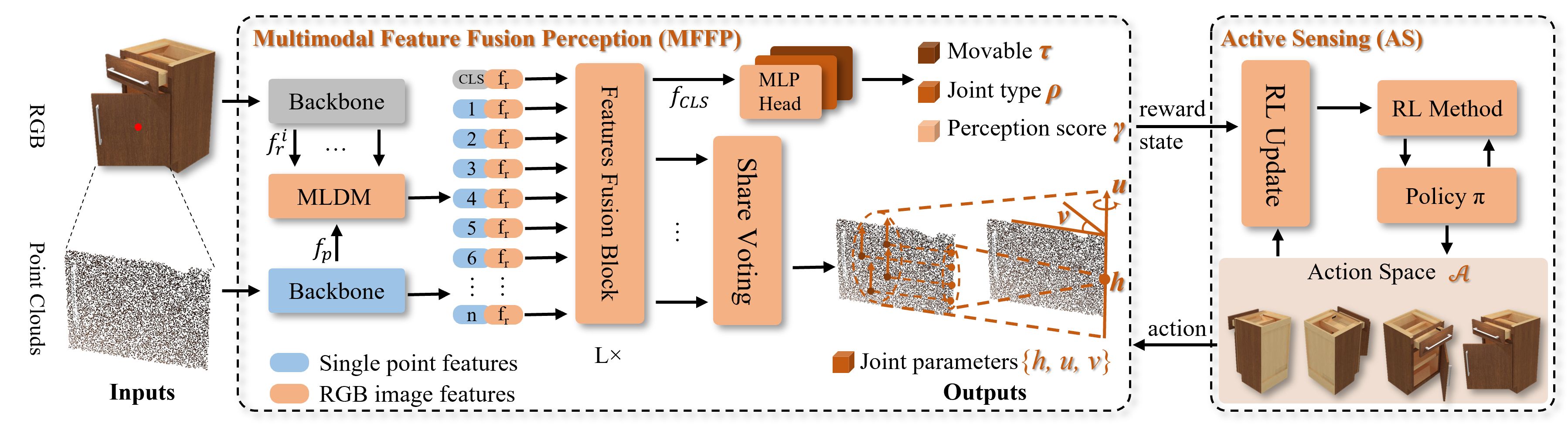
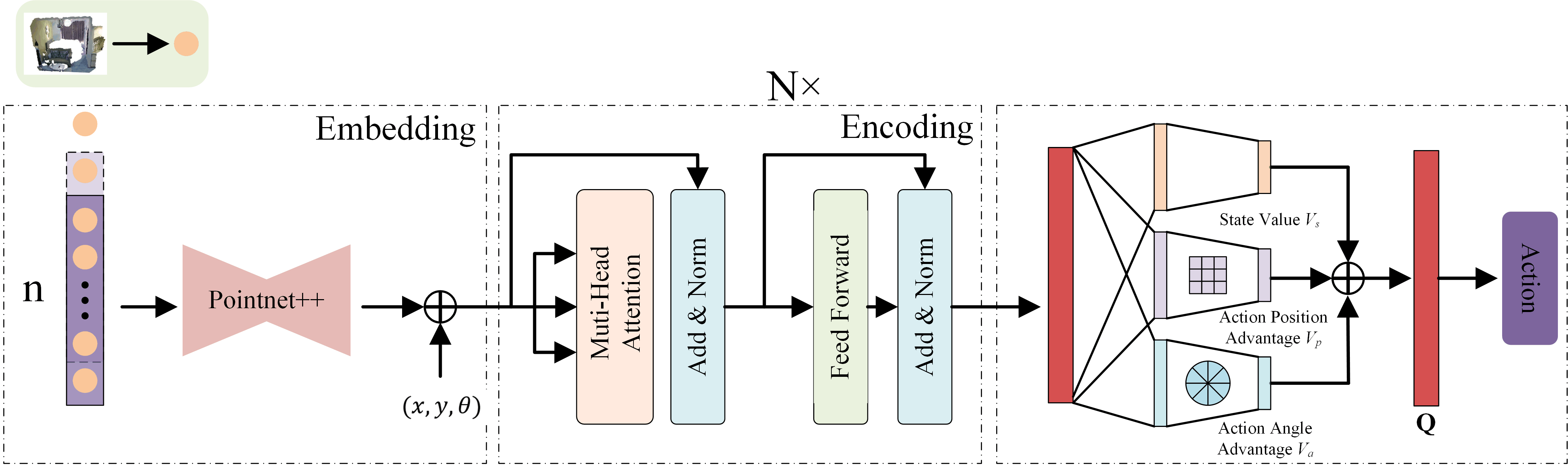
Multimodal Active Robotic Sensing for Articulated Characterization. A framework that enables robots to actively perceive and characterize articulated objects through multimodal sensing.

Python PyTorch IJCAI 2024

Point-UMAE

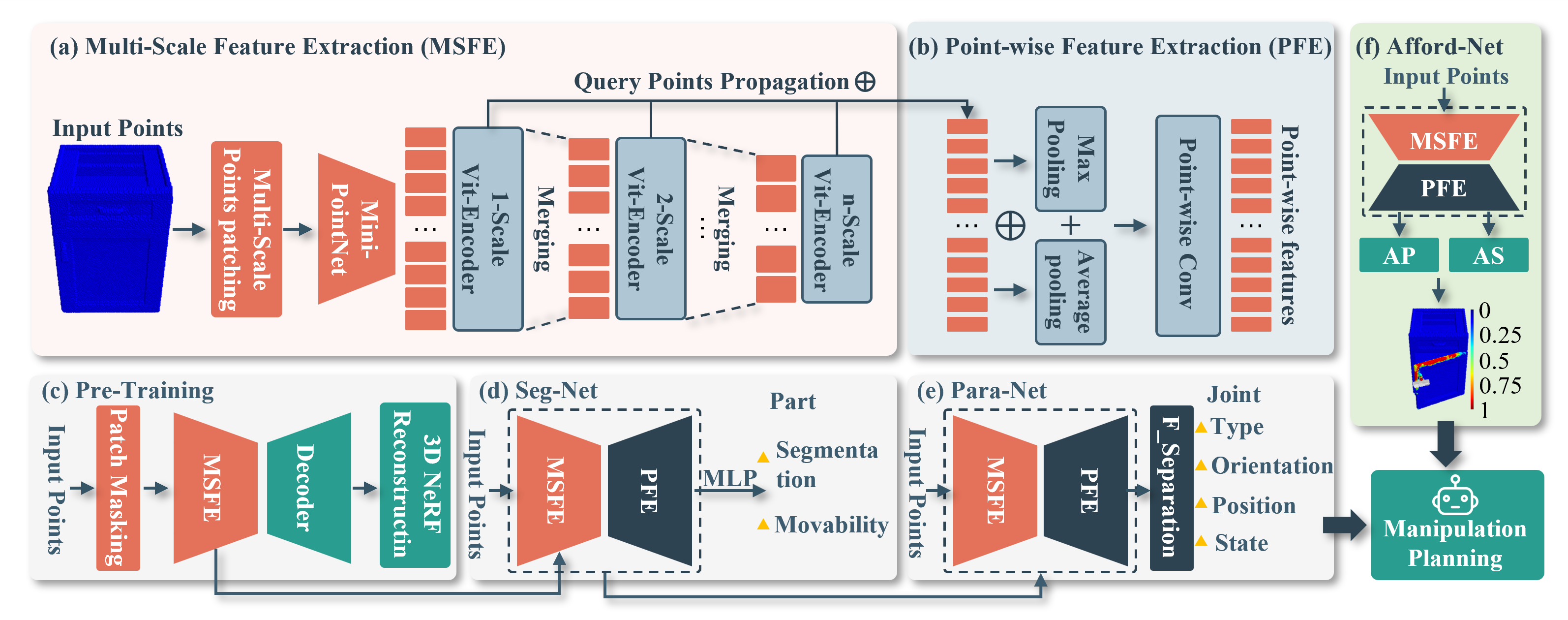
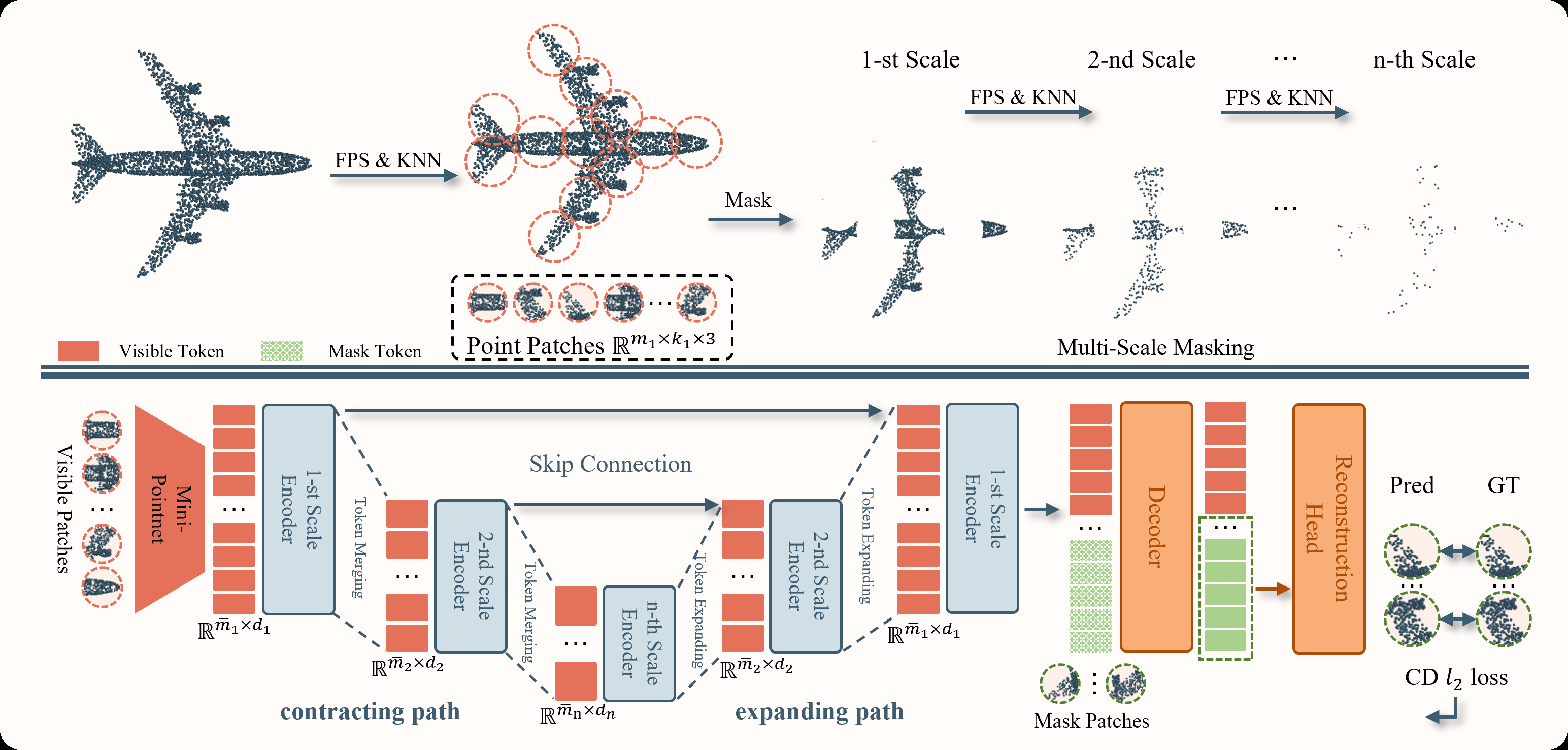
Unet-like Masked Autoencoders for Point Cloud Self-supervised Learning. A multi-scale framework with top-down masking strategy for 3D shape classification, part segmentation, and object detection.

Python PyTorch ICASSP 2025

Publications